On-Grid vs Off-Grid vs Hybrid Solar System (India Guide)
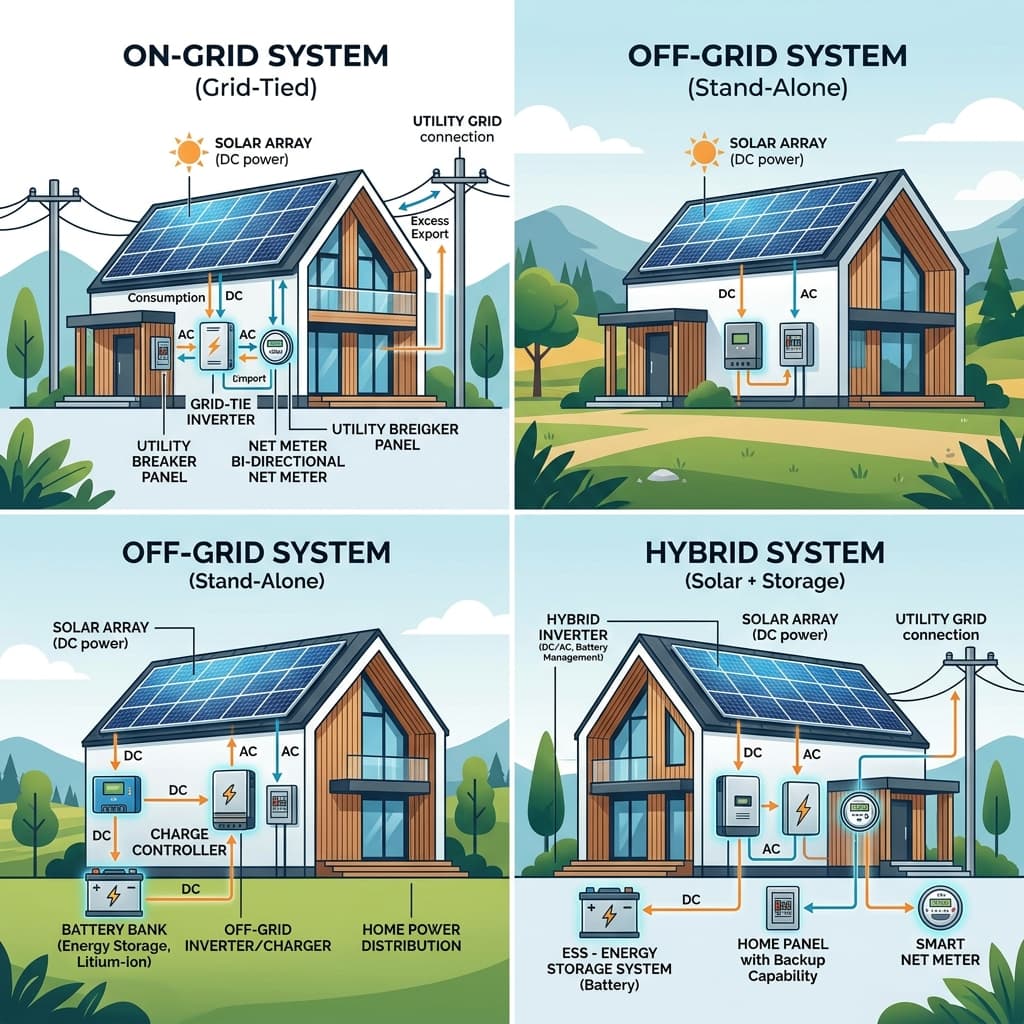
The technology behind solar setups differs based on your goal: saving money, getting backup, or both.
1. On-Grid Solar System
Connected to the utility grid via net-metering. No batteries required. Most cost-effective for pure savings.
Verdict: Best for cities with stable power (Mumbai, Bangalore)
2. Off-Grid Solar System
Independent of the grid. Uses heavy battery storage. Essential for areas with no grid access.
Verdict: Best for farmhouses or remote rural areas
3. Hybrid Solar System
The best of both worlds. Connects to the grid for savings and has batteries for backup during power cuts.
Verdict: Best for areas with frequent load-shedding
📍 Most Popular by City
- Mumbai: 95% On-Grid
- Delhi: 90% On-Grid
- Thane Interiors: 40% Hybrid
- Remote Maharashtra: 60% Off-Grid
Conclusion
If your primary goal is reducing your electricity bill to zero, On-Grid is the way to go. If you value energy independence above costs, Hybrid is the premium choice for 2026.
ELIZ ENERGY Editorial
Dedicated to advancing renewable energy adoption across India. Specialized in commercial solar procurement and enterprise-grade energy strategy.
Ready to switch to solar?
Get a custom commercial solar analysis for your facility.
Related Insights
Solar Panel Cost in India (2026 Complete Guide)
Complete guide on solar panel cost in India with subsidy, savings, and city-wise pricing for Mumbai, Delhi, and more.
Solar Panel Cost in India (2026 Complete Guide)
Rooftop Solar Scheme 2026, total cost of rooftop solar in 2026,grid-connected rooftop solar systems,

Government Subsidy for Solar in India (2026 Update)
Latest updates on PM Surya Ghar Yojana, state-wise subsidies, and how to apply for solar benefits in 2026.